A legacy product, tedious workflows, and a team pulling in different directions
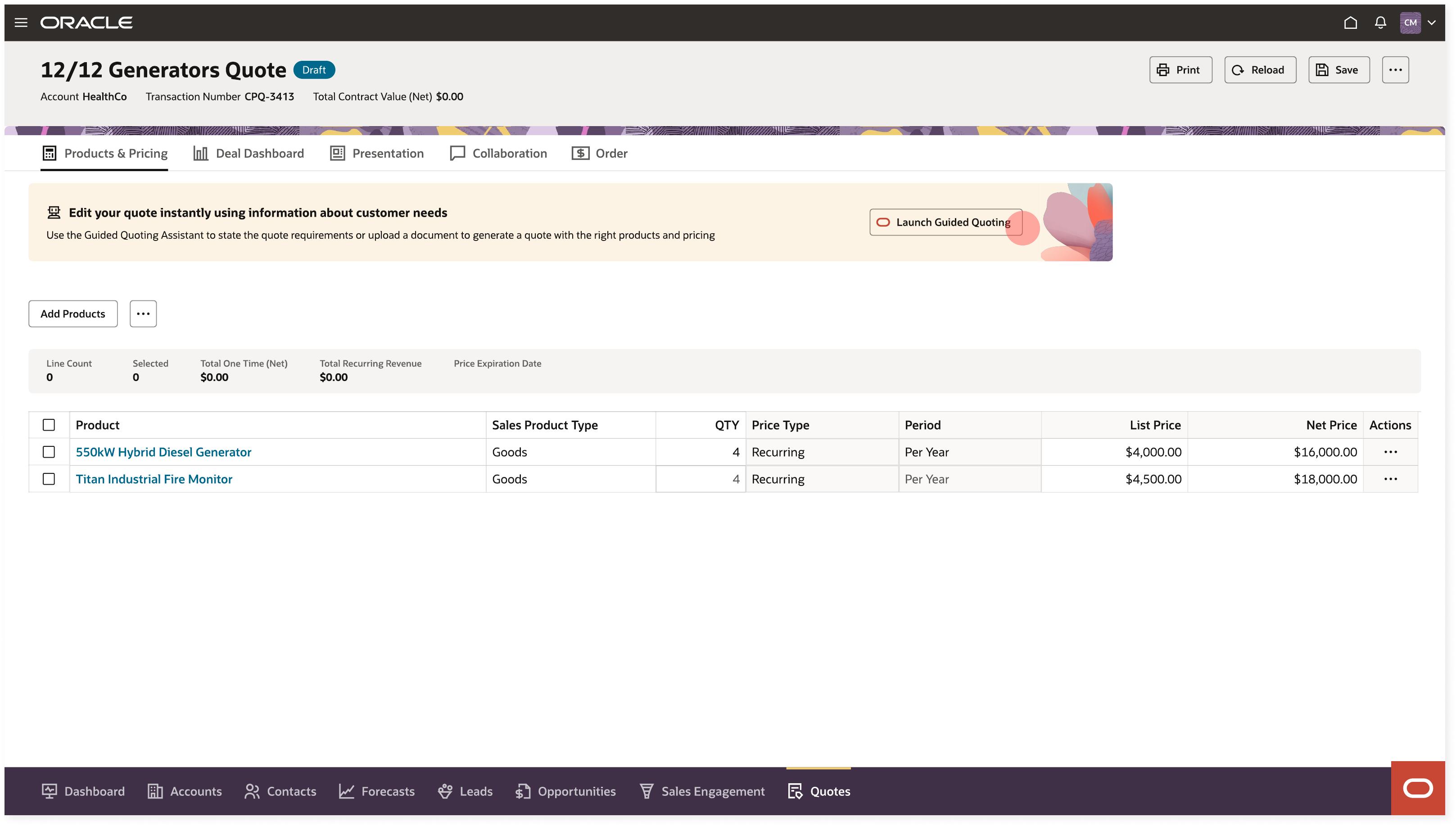
Oracle's CPQ (Configure, Price, Quote) is an enterprise product used by Sales Representatives to fulfil orders. The complex legacy product was overdue for simplification, especially because Oracle was investing in moving toward agentic AI experiences.
Tedious, multi-step quoting workflows that hadn't been meaningfully updated in years — full of friction and unnecessary steps.
Two to three agents built independently by separate teams — no shared design language, no unified experience, no single owner.
The org wanted to move in the agentic direction but lacked a cohesive product strategy for what that actually meant for the quoting experience.
Client demos needed to be ready fast. There was no time for prolonged discovery — decisions had to be made quickly and shipped close to engineering.
"Three different teams had built three different agents. What they didn't have was a unified, coherent experience for the Sales Rep doing the quoting."
Bringing two siloed teams together around one vision
Design lead responsible for bringing strategic alignment across teams and building out the end-to-end agentic workflow.
End-to-end experience design for the unified Guided Quoting agent — from vision through to shipped sprints
Brought two separate orgs and their engineering teams together around a single product direction — bridging silos that had been working independently
Created client-ready demos under tight timelines, working closely with engineering to deliver each sprint on schedule
Introduced new interaction patterns for agentic flows that were adopted into Oracle's Agentic App Builder Design System
Reframing the problem as a systems challenge
The engineering teams had built agents. I reframed the question: what does one coherent experience feel like end to end?
"The idea was to treat the entire quoting journey as a single conversation. Not to create fragmented makeshift solutions for individual problems."
Three agents, three owners, three mental models. Users had to navigate between contexts and stitch together their own experience.
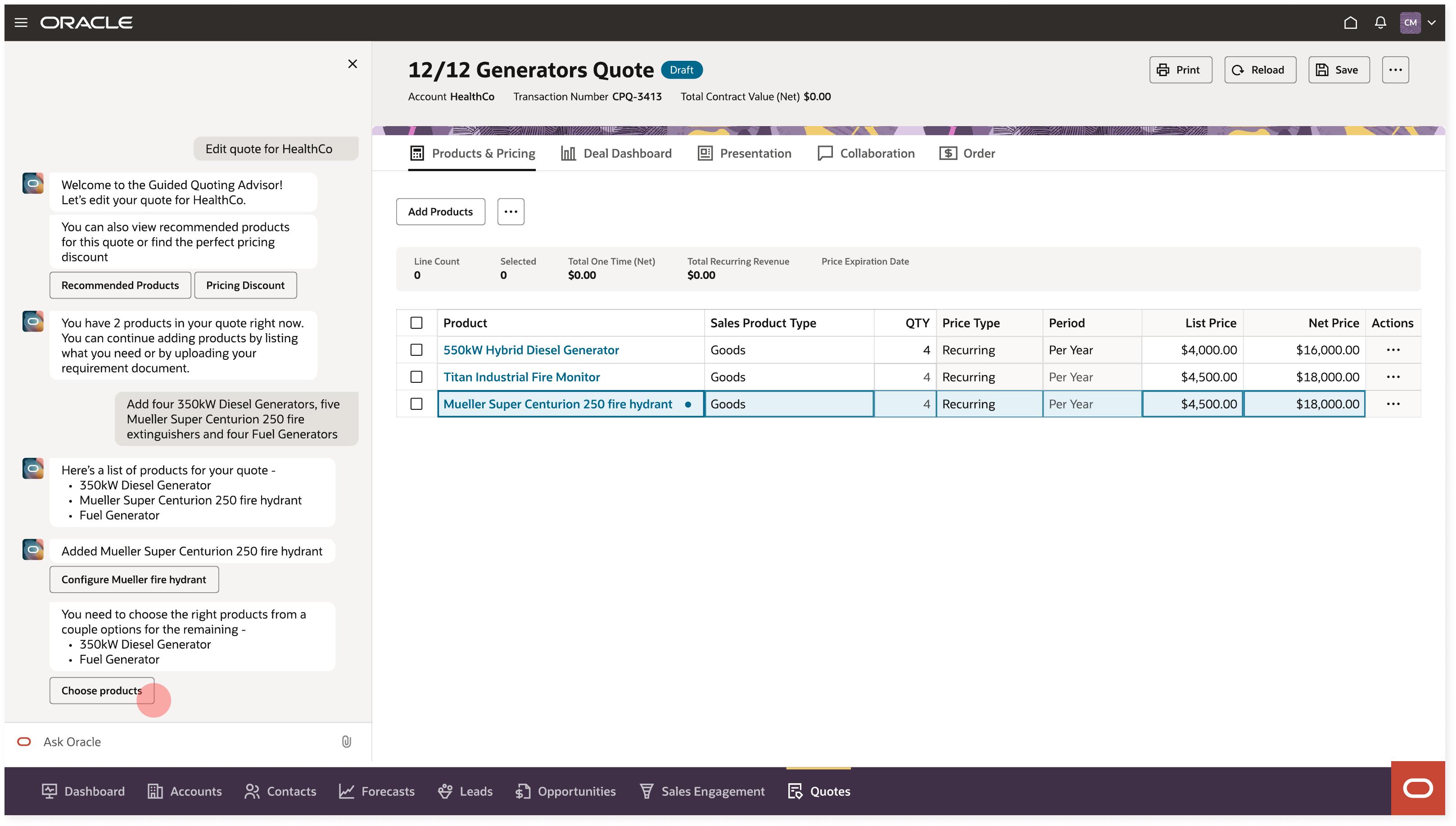
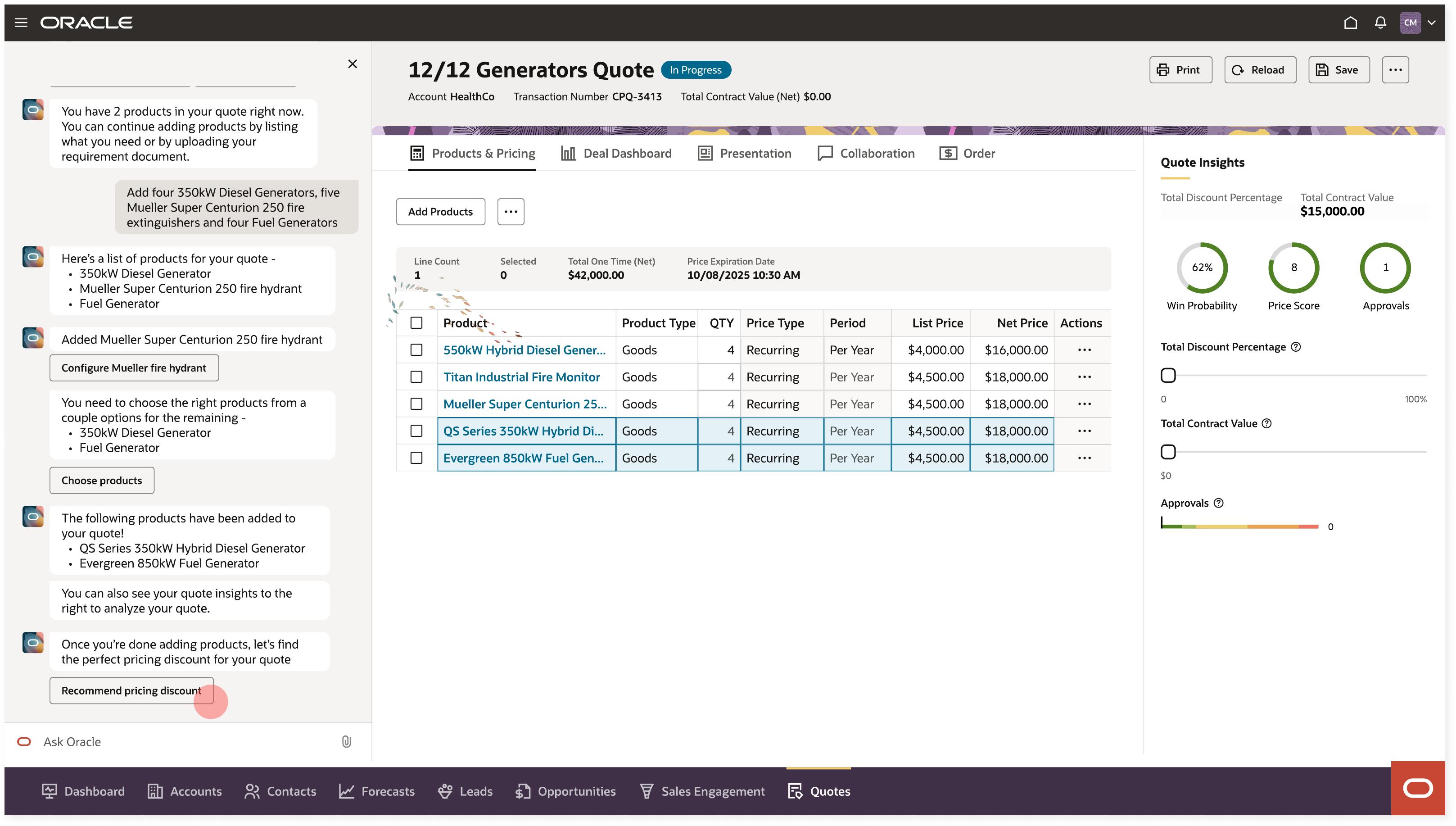
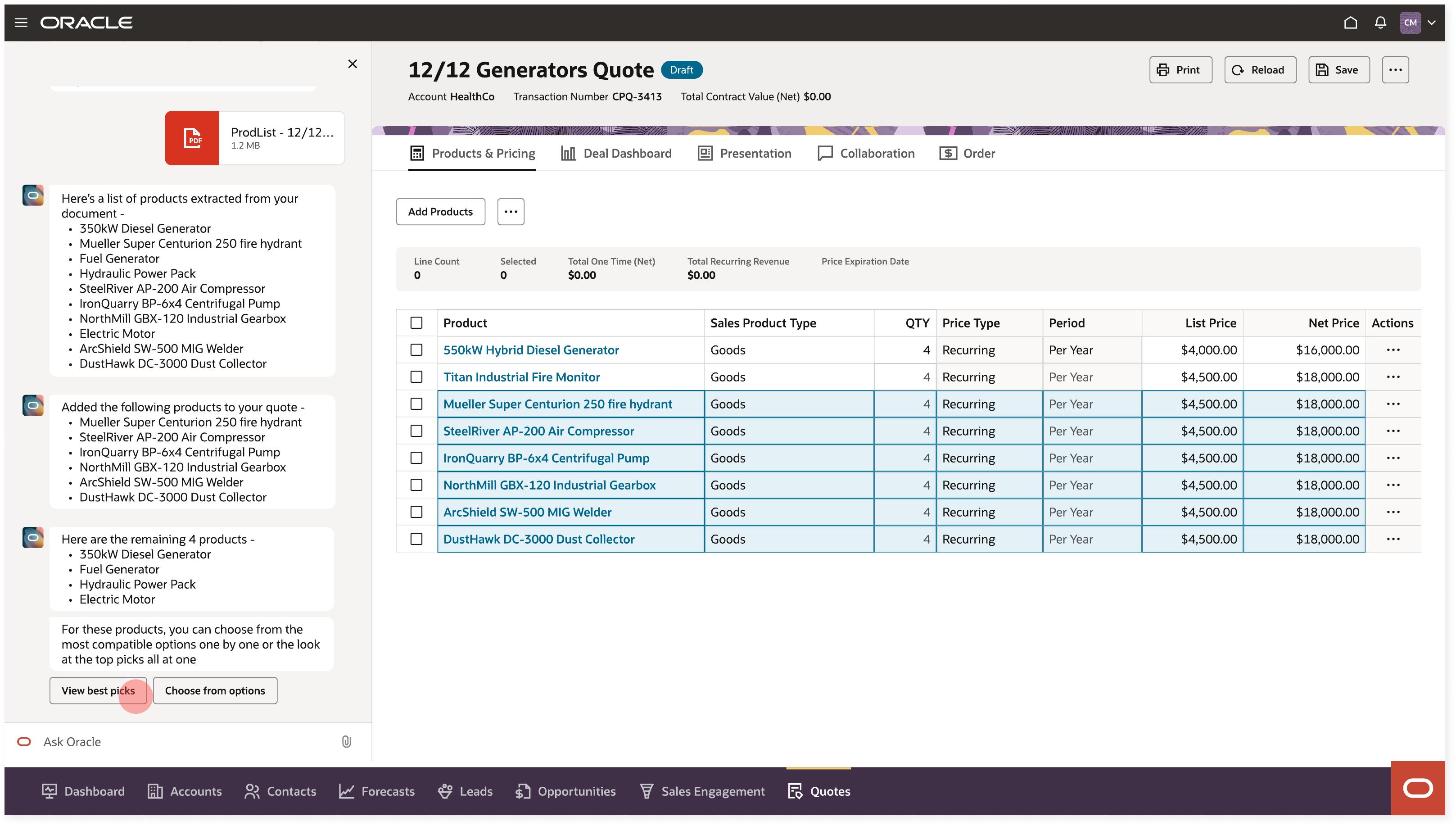
One agent. One coherent conversation. The quoting process flows from start to finish without the user ever feeling the seams between what used to be separate tools.
The interaction patterns I introduced for the agentic quoting flow were adopted into Oracle's Agentic App Builder Design System — giving the work a reach well beyond this single product.
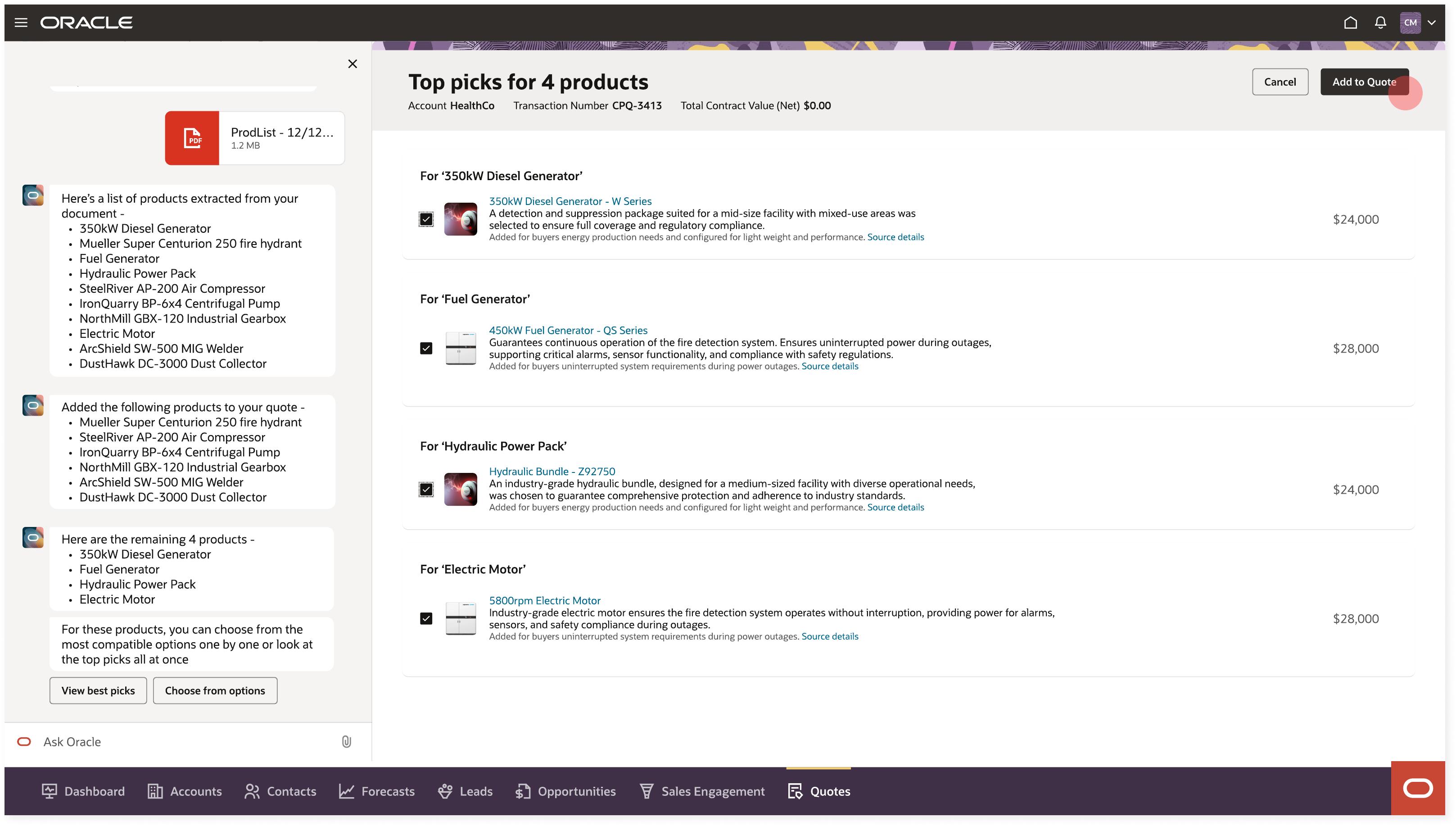
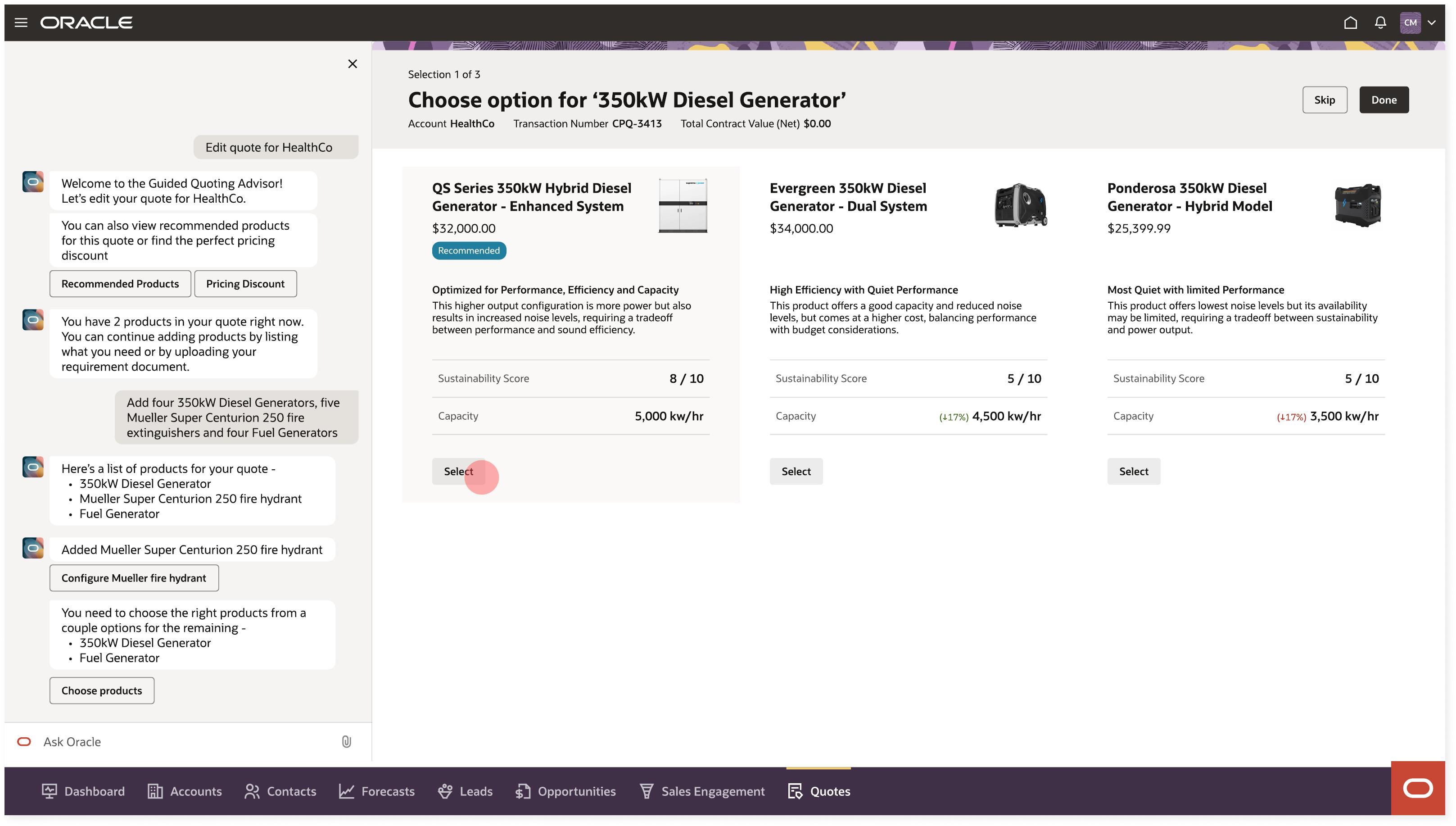
One agent, two paths — both ending at a ready-to-send quote
The agent does what it's confident about and only asks the human to weigh in where judgment is genuinely needed.